

Debunking the Digital Myths That Are Quietly Hurting Businesses
If you search online for advice about building or improving a business website, you will find no shortage of confident opinions. Marketing blogs promise quick wins, social media experts share simplified strategies, and countless articles claim that launching a website is easier than ever. While some of that guidance is helpful, a surprising amount of it is outdated, overly simplistic, or disconnected from how modern websites actually perform.
For business owners trying to grow online, following the wrong advice can lead to years of technical limitations, poor performance, and missed opportunities. Many companies invest significant time and money into websites that look acceptable on the surface but fail to deliver meaningful visibility, credibility, or conversions.
At Kleurvision, we spend a considerable amount of time helping businesses rebuild or repair websites that were created based on this kind of advice. To help separate myth from reality, it is worth examining a few of the most common misconceptions circulating online and explaining what truly matters when it comes to building a high performing digital presence.
Myth #1: “Just Build It on Wix”
Website builders are often marketed as the modern solution to web development. The pitch is simple: drag, drop, click publish, and your business is officially online. In fairness, these tools do serve a purpose. They make it possible for individuals or very small businesses to launch a basic site quickly without needing technical skills. If your goal is simply to have something visible on the internet, they can absolutely accomplish that. Where the problem begins is when a growing business expects a template based platform to function like a strategic digital asset.
Templates are designed to work for thousands of businesses at once, which means they are intentionally generic. Layout flexibility is limited, technical performance can be restricted by the platform itself, and SEO structures are rarely built with long term strategy in mind. What initially feels convenient can eventually become a constraint.
This is why many companies outgrow their website builders faster than expected. At a certain point, the platform stops supporting what the business actually needs to do, and the only realistic solution becomes rebuilding the entire website. Templates are quick. Strategy takes longer. One of those approaches tends to last a lot longer than the other.
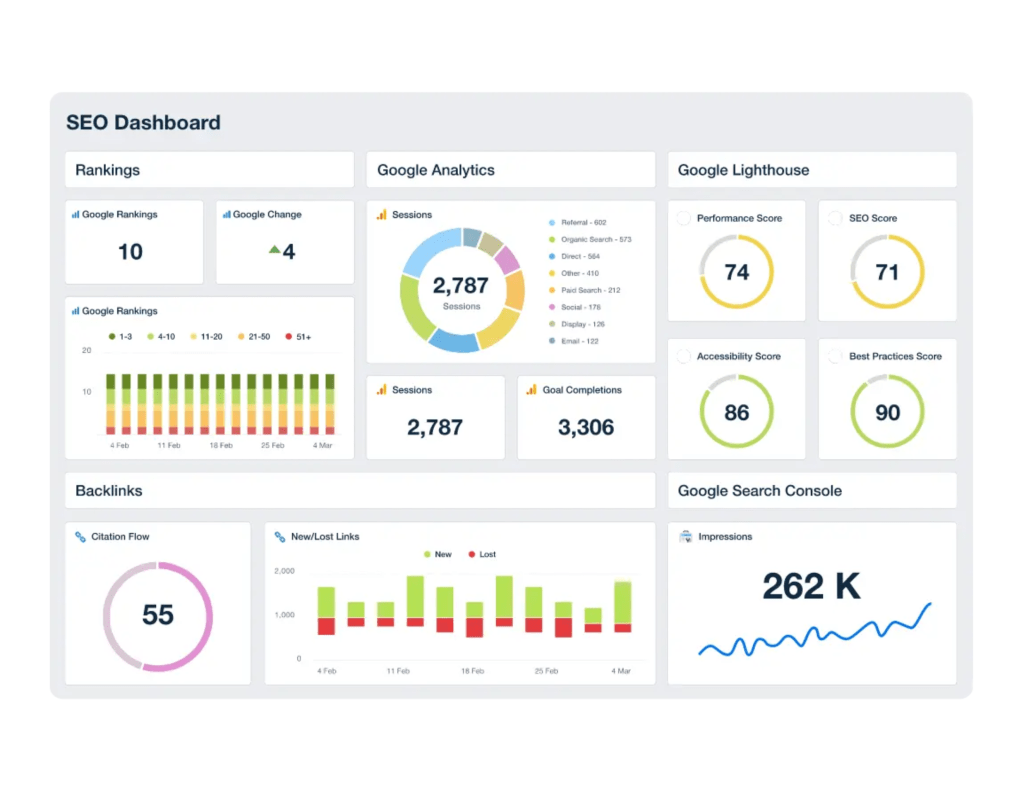
Myth #2: “SEO Is Just Keywords”
This particular myth has impressive staying power. Somewhere along the way, search engine optimization became widely interpreted as the art of inserting specific keywords into a page often enough that Google eventually rewards the effort. That might have been somewhat true fifteen years ago, but modern search engines have moved well beyond that level of simplicity.
Today, search algorithms evaluate context, structure, usability, and relevance. They assess how quickly a site loads, whether it performs well on mobile devices, how content is organized, and whether visitors actually find the information useful enough to stay on the page.
Effective SEO now involves semantic content structure, strong internal linking, technical performance optimization, and consistent topical authority within a subject area. Keywords still matter, but they are only one piece of a much larger system. Treating SEO as a keyword checklist is a bit like trying to win a chess game by focusing exclusively on pawns.
Myth #3: “You Don’t Need a Developer Anymore”
Modern tools have made it easier than ever to assemble a website without professional help. This has understandably led to the popular belief that developers are now optional.
The truth is slightly more nuanced.
It is absolutely possible to create a website without a developer. The real question becomes whether that website will perform well once it is live. High performing business websites involve far more than visual layouts. They require thoughtful site architecture, clean code, mobile responsiveness, accessibility standards, performance optimization, security protocols, and the ability to scale as the business grows.
Developers are not simply placing text and images onto pages. They are building the technical framework that allows the website to function smoothly, integrate with other systems, and remain reliable over time. When this structure is missing, problems tend to appear slowly but persistently. Pages load more slowly, integrations fail, SEO performance stalls, and eventually the site becomes difficult to maintain.
At that stage, the business often ends up hiring a developer anyway, usually to rebuild what should have been built properly in the first place.

Myth #4: “Once the Website Is Live, You’re Finished”
Launching a website is often treated like the finish line of a project. In reality, it is much closer to the starting point.
A modern website is not a static document. It is an evolving digital platform that benefits from continuous refinement. Content needs to expand, search visibility builds gradually, and technical performance requires ongoing monitoring. As technology evolves and customer expectations change, websites need to adapt alongside them.
Businesses that treat their websites as long term digital infrastructure tend to see significantly stronger results over time. Consistent improvements compound into better visibility, stronger credibility, and higher conversion performance.
In other words, the most effective websites are rarely the ones that were simply launched and forgotten.
Good Websites Are Built on Strategy, Not Internet Shortcuts
The internet is full of advice about websites. Some of it is excellent. A surprising amount of it is not.
The challenge for businesses is that the oversimplified advice often sounds the most appealing. Quick solutions promise speed, low cost, and minimal effort. Unfortunately, building a website that genuinely supports a growing business usually requires a more thoughtful approach.
Successful websites are designed with strategy, technical expertise, and a clear understanding of how people interact with digital environments. They combine user experience, performance, content structure, and search optimization into a system that continues working long after launch day.
At Kleurvision, we believe a website should function as more than an online placeholder. It should be a reliable digital platform that grows alongside the business it represents. And while the internet will always have plenty of opinions about how websites should be built, the best results rarely come from shortcuts.
They come from doing the work properly the first time.

Ready for a Website That Actually Works for Your Business?
If you have spent time researching website development, SEO strategy, or digital marketing, you have likely encountered a lot of conflicting advice. Some of it promises instant rankings. Some of it claims websites can be built in an afternoon. Some of it suggests technical expertise is no longer necessary. The reality is far less dramatic but far more effective.
At Kleurvision, we approach website development differently. Our process focuses on custom website design, strategic SEO structure, performance optimization, and scalable development frameworks that allow businesses to grow without constantly rebuilding their digital infrastructure. Rather than relying on templates or shortcuts, we design and build platforms that are tailored to the specific needs of each client.
Whether you are launching a new website, replacing an outdated platform, or trying to improve your Google search rankings and online visibility, the right strategy makes a measurable difference.
Let’s build something better.
Contact Kleurvision to discuss your next custom website project, SEO strategy, or digital platform upgrade, and discover how a well built website can become one of the most valuable tools in your business.